The Best AI Document Translation Services of 2026: A Strategy Guide
January 1, 2024 | Software | No Comments
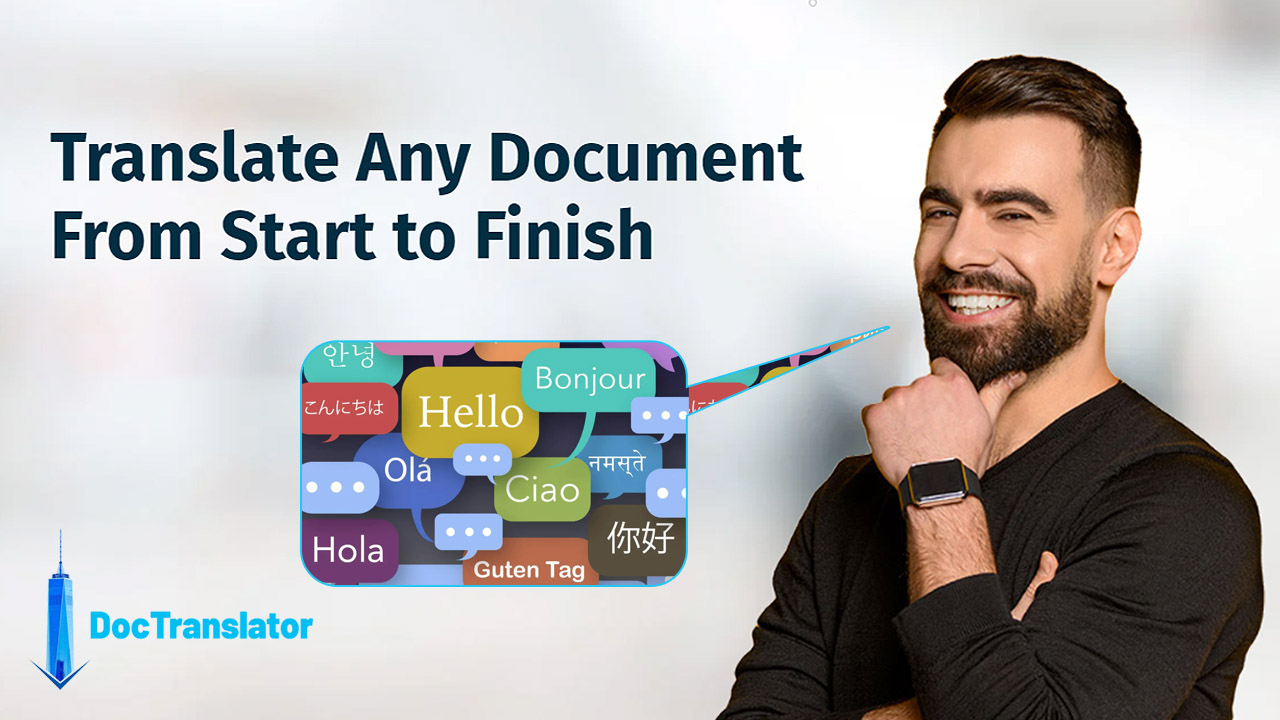
The days of clunky, “robotic” machine translation are officially over. In 2026, document translation has been revolutionized by Large Language Models (LLMs) that don’t just translate text—they *localize* context. Whether you are a law firm translating a 500-page contract or a marketing agency launching a global campaign, the 2026 toolset allows you to preserve 100% of your formatting while achieving human-level fluency.
However, with great power comes the need for extreme security. In an era of AI data harvesting, choosing the right translation partner is as much about **privacy** as it is about **accuracy**.
Chapter 1: The Evolution of Document Translation (2022 vs. 2026)
In 2022, tools like **DocTranslator** were appreciated for their ability to handle PDF and InDesign files. Fast forward to 2026, and the industry has shifted toward “Multimodal Contextual Awareness.”
- **Format Preservation 2.0:** Modern AI can now read an Adobe InDesign or complex Excel file, translate the content, and automatically resize the text boxes to account for “text expansion” (for example, German sentences are often 30% longer than English ones).
- **Voice Consistency:** 2026 tools allow you to upload a “Style Guide.” The AI ensures that your brand’s unique terminology and tone remain consistent across 50+ languages.
- **Privacy First:** Professional translation hubs now offer “Zero-Retention” modes, ensuring your sensitive business documents are never used to train future AI models.
Chapter 2: The Top 3 Document Translation Hubs for 2026
1. DocTranslator (2026 AI-Enhanced Version)
DocTranslator has survived the AI revolution by integrating with Gemini and GPT-4o. It remains the most user-friendly “drag-and-drop” solution for small businesses.
- **Key Advantage:** Incredible support for legacy file formats (.doc, .xls, .ppt) and specialized design files (.idml).
- **Best for:** Quick, high-quality translations for startups and freelancers.
2. DeepL Pro: The Stylistic Leader
DeepL remains the gold standard for European languages in 2026. Its “DeepL Write” integration helps not just with translation, but with *refining* the document to sound more professional or more casual depending on the audience.
- **Key Advantage:** The most “natural” sounding output for business correspondence.
- **Best for:** Corporate communication and legal documents.
3. Google Cloud Translation Hub
For enterprise-level needs, Google’s Translation Hub is unbeatable. In 2026, it offers “Human-in-the-Loop” workflows where AI does 95% of the work and a professional linguist verifies the final 5% through a single dashboard.
- **Key Advantage:** Massively scalable for companies processing thousands of documents per month.
- **Best for:** Global enterprises and government agencies.
Chapter 3: Critical 2026 Features: Security & Compliance
In 2026, “Free” often comes with a hidden cost: your data. When translating business documents, you must verify three compliance standards:
1. **SOC 2 Type II & GDPR:** Mandatory for any service handling European or North American business data. 2. **End-to-End Encryption (E2EE):** Ensure the document is encrypted from the moment you upload it until the moment you download the translated version. 3. **Local Data Residency:** For government or high-security sectors, look for services that allow you to choose *where* the translation takes place (e.g., ensuring your data never leaves the EU or the US).
Chapter 4: How to Prepare Your Documents for AI Translation
To get a “Perfect” 99% accuracy rate in 2026, follow these preparation steps:
- **Flatten Complex Layouts:** While AI is good at formatting, avoiding “floating” text boxes in your source file will ensure the cleanest output.
- **Use High-Resolution Source Files:** If you are translating an image-heavy PDF, ensure it has been OCR-processed (Optical Character Recognition) before uploading.
- **Provide a Glossary:** If your business uses specific acronyms or internal jargon, upload a .CSV glossary to the translation tool first.
Summary: The 2026 Translation Checklist
- [ ] Verify the service uses LLM-based translation (not just legacy NMT).
- [ ] Confirm “Zero-Retention” privacy policy for sensitive data.
- [ ] Test the “Format Preservation” with a single-page sample first.
- [ ] Audit the “Cultural Nuance” (localization) of the output.
The world is smaller than ever in 2026. By leveraging the right AI document translation tools, you can break down language barriers instantly while keeping your data safe and your brand voice intact.
— *Looking to build a custom AI translation pipeline for your business? The Brosoftsystem team specializes in API integrations for Google Cloud, DeepL, and custom LLM deployments.*
