The Definitive 2026 Guide to Fixing WordPress Fatal Errors: Maximum Execution Time Exceeded
January 1, 2026 | All | No Comments
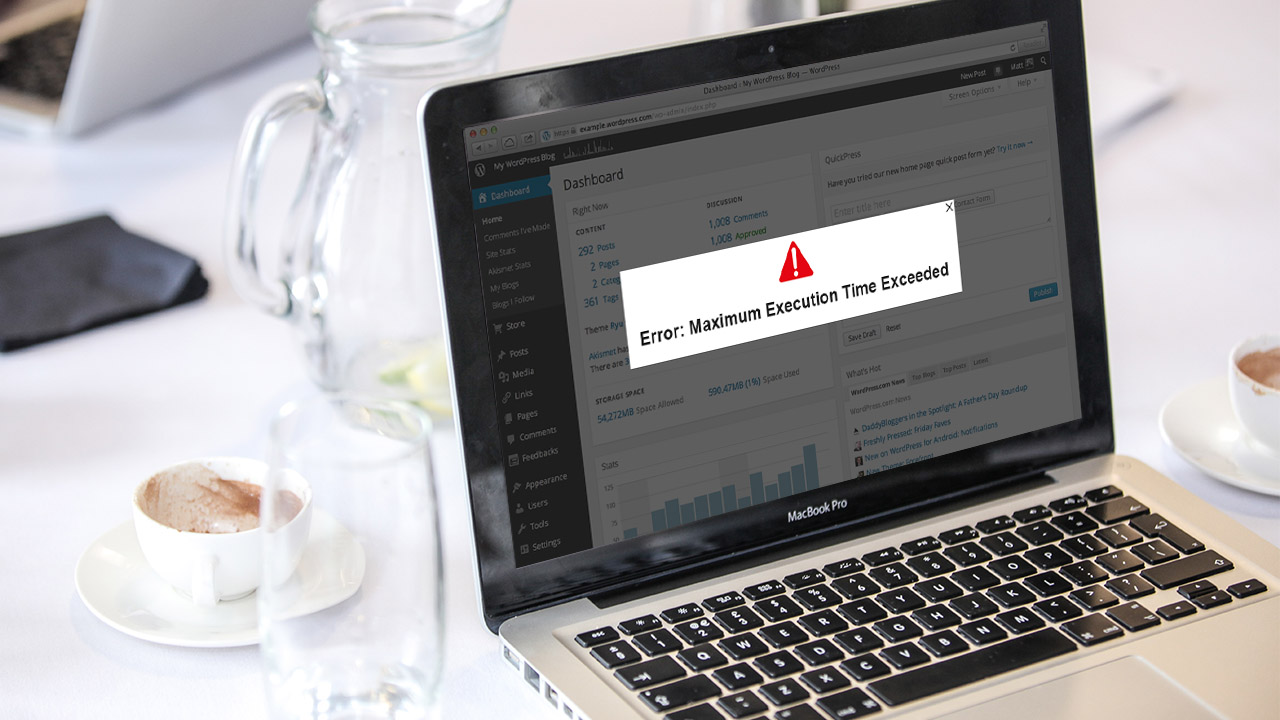
Few things strike fear into a WordPress site owner quite like the phrase “Fatal Error.” It sounds permanent, destructive, and expensive. One of the most common variants of this is the “Maximum Execution Time Exceeded” error.
In 2026, as WordPress sites become more complex—integrated with AI content generators, real-time data feeds, and advanced security layers—this error has become more frequent. But here is the good news: it is almost never a sign of a “broken” site. It is simply a “timeout” signal from your server.
In this Masterclass, we will dive deep into the technical causes of this error and provide you with a multi-layered defense to fix it and prevent it from ever returning.
—
Chapter 1: Why Does This Error Happen in 2026?
PHP, the server-side language that powers WordPress, is designed to be efficient. To prevent a single “runaway” script from hogging all the server’s CPU and crashing the entire machine, PHP has a built-in safety switch called max_execution_time.
The 2026 Culprits:
- AI Background Processing: Many modern plugins use local LLMs or heavy API calls to generate images or content. If your server is slow to respond, the script hits the timeout wall.
- Action Scheduler Bloat: Plugins like WooCommerce use the “Action Scheduler” for background tasks. If this queue gets backed up with thousands of tasks, it can trigger continuous timeouts.
- LiteSpeed LSAPI Timeouts: Modern hosting environments like Hostinger use LiteSpeed. LiteSpeed has its own “External Application” timeout settings that can override your PHP settings, making the error harder to diagnose.
—
Chapter 2: The “No-Code” Solutions for Modern Owners
Before you dive into your server’s core files, there are two high-level ways to resolve this in 2026.
1. The Hosting Panel PHP Selector
Most premium hosts now provide a UI to manage these limits.
- Step: Log into your hPanel or cPanel.
- Action: Find PHP Configuration > PHP Options.
- Optimization: Look for
max_execution_time. If it is set to 30 or 60, increase it to 300. This gives scripts 5 full minutes to complete their work.
2. WordPress Recovery Mode
If a specific plugin update caused the error, WordPress will likely enter Recovery Mode.
- Check your Email: Look for a message titled “Your Site is Experiencing a Technical Issue.”
- The Link: Follow the unique link in the email to log in to a “safe” version of your dashboard where you can deactivate the plugin that triggered the timeout.
—
Chapter 3: Technical Remediation (htaccess and php.ini)
If the UI methods fail, you must intervene at the server level.
The .htaccess Strategy (Apache/LiteSpeed)
Your .htaccess file is the control center for how your server handles requests. Add this line at the very bottom:
`apache
php_value max_execution_time 300
`
Important for LiteSpeed Users: If you are on a LiteSpeed server, the server might kill the connection before PHP even hits its limit. You must add this “No-Timeout” directive:
`apache
RewriteRule .* – [E=noconntimeout:1]
`
The php.ini Method
If you have a dedicated server or a VPS, you might need to edit the php.ini file directly. Locate the file and update the following values to these recommended 2026 standards:
max_execution_time = 300max_input_time = 300memory_limit = 512M
—
Chapter 4: Pro-Level Fixes with WP-CLI
For developers and advanced users, the command line is the most effective tool. If your dashboard is inaccessible, use WP-CLI to clear the “background bloat.”
Clearing the Action Scheduler
Many timeouts are caused by a “stuck” database queue. Run these commands:
1. wp cron event list (To see what is pending)
2. wp action-scheduler run --force (To force-complete the background tasks)
Often, once the backlog is cleared, the “Fatal Error” disappears instantly without requiring any permanent limit increases.
—
Chapter 5: Building a Timeout-Resistant Architecture
Fixing the error is a reactive move. To truly “modernize” your WordPress site for 2026, you should build a site that is resistant to timeouts:
- Asynchronous AI: If you use AI tools, ensure they use “Off-Server” processing (API-based) rather than trying to run heavy models on your shared hosting CPU.
- Database Optimization: Use a plugin like Advanced Database Cleaner to regularly prune expired transients and orphan metadata that slow down PHP queries.
- Upgrade to PHP 8.3+: Each new version of PHP is significantly faster and handles memory more efficiently, reducing the time scripts take to execute.
—
Summary: From Fatal to Fixed
In 2026, a Maximum Execution Time error is a symptom of a site that is trying to do more than its current configuration allows. By increasing your limits, clearing your background queues, and optimizing your server environment, you can move past the panic of “Fatal Errors” and focus on growing your digital presence.
— Is your site constantly timing out despite following these steps? The Brosoftsystem technical team specializes in high-performance server tuning and database remediation.
